All Categories
Featured
Table of Contents
El Houni asked the speakers to share what keeps them "on-point" at work and what recommendations they have for the audience. Hamad Al Hajri, CEO and Creator of Snoonu stated it was "essential to build boundaries" in between work and personal life and take brief vacations to "detach" from the workplace.
Tariq Bin Hendi, CEO and Board Member of Astra tech, reacted that "the best recommendations is to constantly challenge yourself" while also guaranteeing a healthy sleep and workout routine. Mohamed Khadiri, CEO of Bank of Sharjah explained that to excel and "to be near to your client, you need to be enthusiastic about your work and comprehend customers' requirements". Karim Benkirane, CCO of Du, said: "If you make the people you work with pleased, you will make the customer pleased, who will then make the investors pleased."Ambareen Musa, CEO for Revolut GCC, stated the capability to "not worry" is the key to finding an option for issues.
This week, we're convening more than 3000 conferences between financiers and 119 Gulf-listed companies with a combined worth of $2.4 trillion at the HSBC GCC Exchanges Conference 2026, in London. We're bringing together financiers, companies, exchanges, and policymakers to discuss what is altering in the area, and what comes next, including the growth and ongoing advancement of the Gulf's capital markets, and the region's growing function in global networks of capital and trade.
Saudi Arabia and UAE are poised to lead the Gulf area's economic expansion in 2026, supported by strong private-sector performance, durable domestic need and restored investment momentum, according to the current ICAEW Economic Insight Q4 2025 report, produced by Oxford Economics. The GCC is expected to outshine most global regions peers next year, with local GDP projection to grow by 4.4%. Across the GCC, non-energy activity is predicted to expand by 4.1% in 2026, driven by strong labour markets, improving credit conditions and increasing investment in innovation and AI-related facilities.

Accelerating Dubai Corporate Expansion through Strategy
Oil profits will be under pressure in the first half of 2026, production is anticipated to increase once again in the 2nd half of 2026, supporting the area's medium-term outlook, it stated. Saudi Arabia will remain a significant contributor to GCC momentum, with GDP projection to grow 4.3% in 2026.
Development will be supported by industrial expansion and policy reforms, including relieved foreign ownership rules that aim to promote more investment. The financial deficit is projected to expand to 5.6% of GDP next year amid softer oil rates, while the recent five-year rent freeze in Riyadh aims to reduce inflationary pressures, though it might constrain future housing supply.
Strong domestic fundamentalsThe UAE is also placed for another strong year of performance, with GDP forecast to rise 5.6% in 2026 as non-oil sectors continue to broaden. Tourism, trade and monetary services stay key growth motorists, supported by population development and continual domestic need. Dubai's economy grew 4.4% in the first half of 2025, reflecting broad-based non-oil strength.
Ways to Leverage Market Intelligence for Success
Oil production is expected to select up again in the 2nd half of 2026, complementing continuous investment in infrastructure, technology and international trade collaborations. Hanadi Khalife, the Head of Middle East, ICAEW, said: "This quarter's outlook reinforces how far the GCC has actually been available in structure varied, resistant and internationally competitive economies.
Scott Livermore, ICAEW Economic Advisor, and Chief Economic Expert and Handling Director, Oxford Economics Middle East, stated: "Saudi Arabia and the UAE are getting in 2026 with strong structures. Saudi non-oil activity is acquiring speed, supported by robust demand and rising financial investment, even as fiscal pressures increase.""The UAE continues to benefit from solid domestic basics, a sharp uplift in federal government costs and sustained diversity efforts.
Emerging Strategic Trends Shaping the 2026 Regional Market
GCC countries are pivoting towards a method of 'durability over expansion' getting in 2026, as the area gets ready for a global landscape specified by softer oil costs, geopolitical fragmentation, and the rapid transition to an AI-enabled economy. According to a brand-new regional outlook by PwC, the GCC is transferring to insulate its growth from external shocks by deepening worldwide trade combination, securing commercial supply chains, and executing a decisive shift from innovation aspiration to functional implementation.
Ways to Leverage Market Intelligence for Success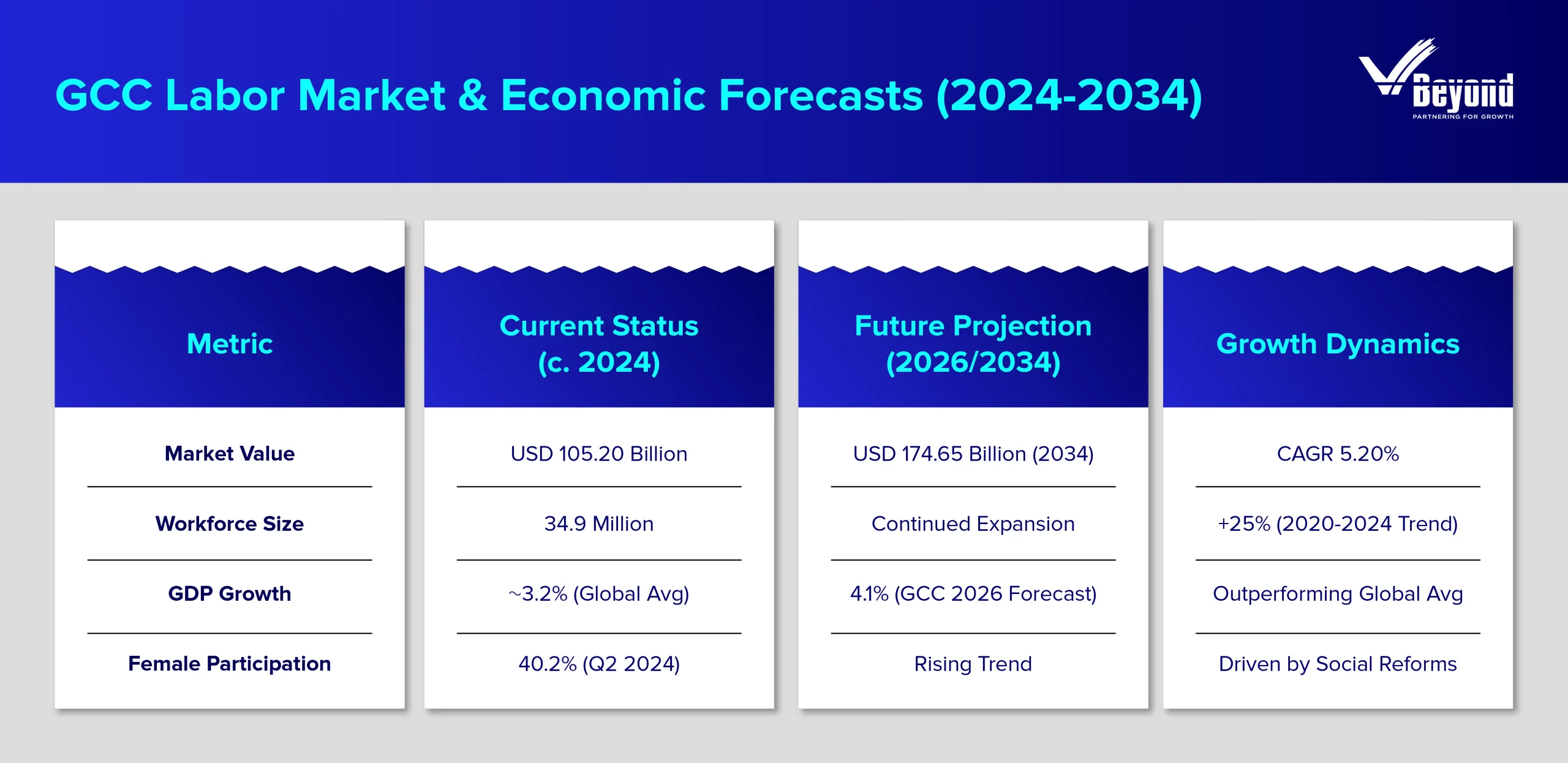
Negotiations totally free Trade Arrangements with China, the EU, and Japan are advancing, while talks with the UK have actually entered last preparing stages. The area is significantly positioning itself as a main hub for east-west trade through the IndiaMiddle EastEurope Economic Corridor (IMEC). To support domestic production, securing vital minerals has ended up being a tactical concern.

Latest Posts
How to Utilize GCC Intelligence for 2026 Success
Ways to Leverage GCC Intelligence for Success
Leading the 2026 Regional Business Landscape for Executives